White Mold in Your Crawl Space: What It Means in South Carolina Homes
White mold on wood in a crawl space usually signals excess moisture. Here is what it means in South Carolina homes and how to deal with it.
Call now to speak to a specialist
Call (888) 318-2605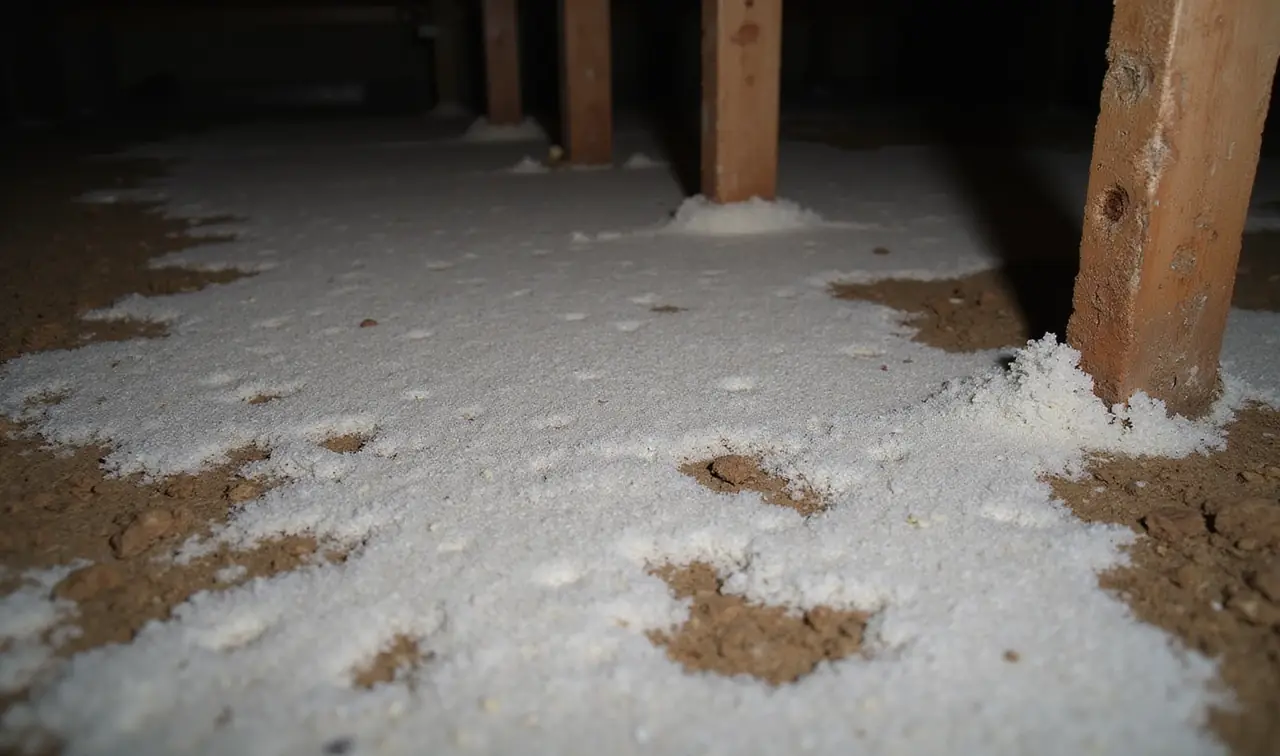
White mold on wood in a crawl space almost always means the wood is staying damp, usually from humid air, poor ventilation or ground moisture. It is common on joists and subfloor in South Carolina homes. Getting rid of it takes two steps: remove the growth, then fix the moisture source, because mold returns if the crawl space stays wet.
What does white mold on wood in a crawl space mean?
White mold on wood in a crawl space means moisture is present and the wood is giving mold a place to grow. It often looks fuzzy, powdery or cottony and may appear in patches on joists, the subfloor and the sill plate.
Crawl space mold is fungal growth on wood and other materials beneath a home, driven by humidity, standing water or condensation. It is one of the most common mold findings in South Carolina.
Is it mold, mildew or something else?
White growth on wood can be mold, but it can also be efflorescence or wood treatment residue, so appearance alone is not enough. Efflorescence is a crystalline mineral deposit left on masonry and concrete when water evaporates. It looks chalky and does not feel fuzzy.
- Fuzzy or cottony and spreading along wood: likely mold.
- Hard, chalky crust on block or concrete: likely efflorescence.
- Spiderweb-like strands: could be fungal growth that needs a closer look.
An inspector can tell the difference with a moisture meter and, when useful, sampling. Mold Inspection and Testing in South Carolina explains how.
Why South Carolina crawl spaces grow white mold
South Carolina is humid most of the year, and many homes sit over vented crawl spaces that let that humid air in. When warm moist air meets cooler wood and ductwork, moisture condenses.
- Coastal areas: salt air, tropical storms and tidal flooding keep crawl spaces wet, as seen in Charleston and Mount Pleasant.
- Midlands: hot humid summers drive condensation on cool surfaces.
- Upstate: heavier rain and red clay soils hold water near foundations.
Other causes include plumbing leaks, bare dirt floors with no vapor barrier, and downspouts that drain toward the house. Homes near Mold Removal in Summerville and across the Lowcountry commonly deal with these patterns.
How to get rid of mold in a crawl space
Getting rid of mold in a crawl space means removing or cleaning the affected wood, controlling moisture, and drying the space. Surface wiping alone rarely works because mold in wood is not just on top.
- Find and fix the water source, such as a leak, a drainage problem or an open vent.
- Contain the area so spores do not travel into the living space.
- Remove or clean affected materials. Wood is often cleaned using HEPA vacuuming and abrasive methods, while wet insulation is usually removed.
- Dry the space with dehumidification and air movement.
- Verify the result. Some homeowners order independent testing afterward.
Crawl spaces are tight, low and often wet, so most homeowners find this job hard to do safely. Crawl Space Mold Removal in South Carolina describes how the work generally goes.
Fixing the moisture so it stays gone
Cleaning without moisture control invites regrowth, often within weeks in summer. Mold can start growing on wet materials within 24 to 48 hours, and the EPA suggests keeping indoor humidity below 60 percent.
Common fixes include repairing leaks, regrading or extending downspouts, installing a vapor barrier, and using a dehumidifier. Some homeowners choose to seal the space entirely, which is what Crawl Space Encapsulation in South Carolina covers.
Common mistakes
- Spraying bleach on wood and leaving it wet.
- Painting or sealing over mold.
- Leaving wet insulation in place.
- Closing the vents without addressing ground moisture.
- Ignoring a smell coming up through the floor.
When to call a professional
Call a professional when the growth covers more than about 10 square feet, when the crawl space has standing water, or when you smell mold inside the house. Mold Removal South Carolina is a referral line that connects you with an independent local company that can inspect your crawl space and explain what is needed.
If you have health questions, talk to a doctor. The CDC and the South Carolina Department of Environmental Services (SC DES) have guidance, and SC DES has a mold hotline at 888-815-3509.
Frequently Asked Questions
Is white mold in a crawl space dangerous?
Color does not tell you how serious it is. White mold signals moisture, and larger areas should be looked at by a professional. For health questions, talk to a doctor.
Can I clean white mold off wood myself?
Small areas under about 10 square feet may be manageable, but crawl spaces are tight and wet. Larger areas are better left to a professional.
Will white mold come back?
Yes, if moisture stays. Fixing the water source and controlling humidity matter as much as the cleaning.
Do I need encapsulation?
Not always. It is one option for controlling moisture. An inspector can tell you whether it makes sense for your crawl space.
Get help with Mold Removal in South Carolina
If you have found white mold under your home, call (888) 318-2605 and we will connect you with an independent local mold remediation company that serves your area.