The Mold Remediation Process, Step by Step
The mold remediation process runs from finding the moisture to verifying the result. Here is each step explained for South Carolina homeowners.
Call now to speak to a specialist
Call (888) 318-2605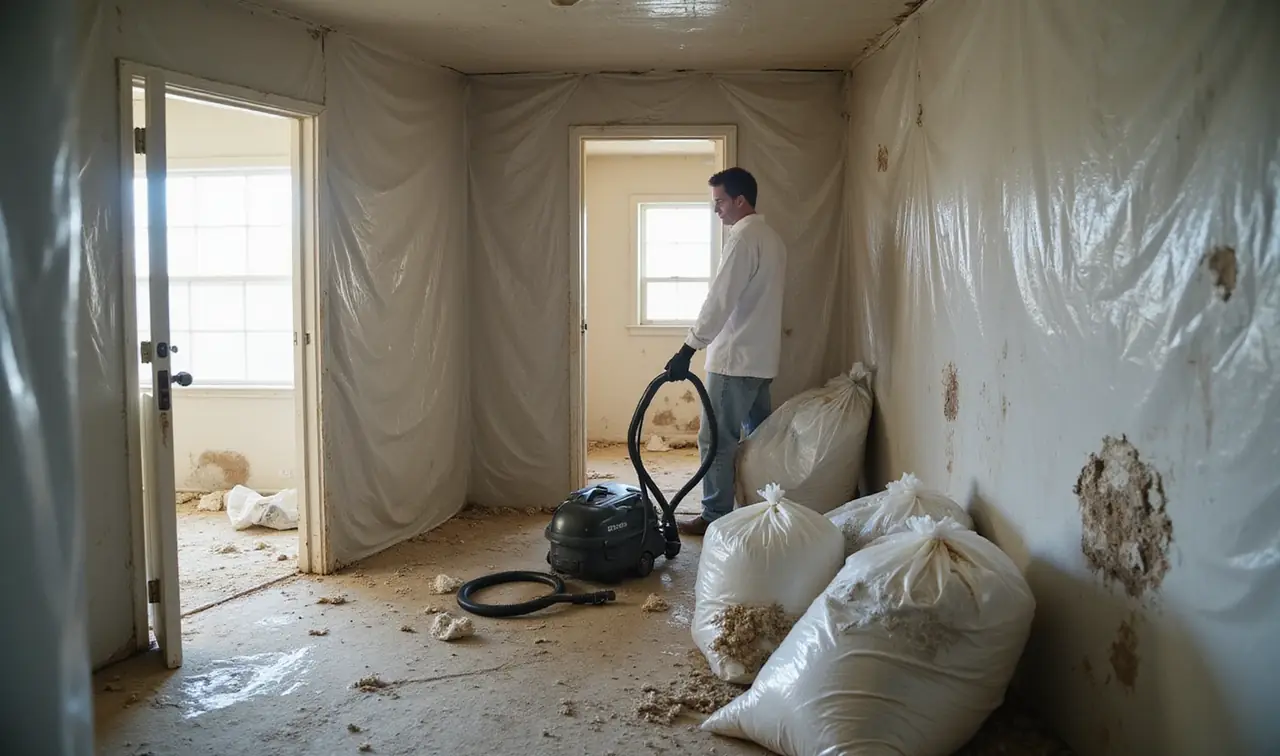
The mold remediation process generally runs in six steps: inspect and find the moisture, fix the moisture source, contain the area, remove or clean affected materials, filter and dry the space, and verify the result. Every job varies, but this order holds because mold returns if moisture stays and spreads if the area is not contained. Here is what each step involves for a South Carolina home.
What are the steps of mold remediation?
Mold remediation is the process of finding and fixing the moisture that feeds mold, containing the affected area, removing or cleaning contaminated materials, and drying the space so mold does not return. It is needed when mold covers more than about 10 square feet, follows flood or sewage water, or involves the HVAC system.
For a broader overview of this service, see Mold Remediation in South Carolina.
Step 1: Inspect and find the moisture
The first step is an inspection to find out how far the mold extends and what is feeding it. The independent company you are connected with looks at visible growth, checks walls, floors and crawl spaces with moisture meters, and traces leaks.
In some cases sampling is used, though the EPA notes it is often unnecessary when mold is already visible. Mold Inspection and Testing in South Carolina goes deeper on how that stage works.
Step 2: Fix the moisture source
The moisture source has to be fixed because mold will grow back on any material that stays wet. Mold can start growing on wet surfaces within 24 to 48 hours.
- Plumbing leaks are repaired.
- Roof and flashing leaks are patched.
- Drainage and downspouts are redirected away from the foundation.
- Ventilation and humidity problems are addressed.
In humid or coastal parts of the state, this step can include moisture control in the crawl space or attic, since those areas collect humid air.
Step 3: Contain the area
Containment keeps spores from spreading into clean parts of your home during the work. Plastic sheeting seals off the area, and negative air machines pull air through filters so it flows into the work zone instead of out of it.
Workers wear protective equipment, and HVAC returns in the area are typically covered or shut down so the system does not move spores through the house.
Step 4: Remove or clean affected materials
Porous materials are usually removed, while hard materials are cleaned. Wet or moldy drywall, insulation and carpet are generally cut out, bagged and taken away. Wood framing is cleaned, often with HEPA vacuuming and abrasive methods.
- Removed: drywall, insulation, carpet and pad, ceiling tile.
- Cleaned: framing, subfloor, hard surfaces.
Black mold specifically is addressed the same way as other growth. Black Mold Removal in South Carolina explains why the color does not change the approach.
Step 5: HEPA filtration and drying
After removal, the area is cleaned with HEPA vacuums and air scrubbers, then dried with dehumidifiers and fans. HEPA filters are designed to capture very small particles, which helps clear fine dust and spores from the air and surfaces.
Drying matters as much as cleaning. The EPA suggests keeping indoor humidity below 60 percent, ideally between 30 and 50 percent.
If water caused the problem, Water Damage Mold Cleanup in South Carolina explains how drying and mold cleanup fit together after a leak or storm.
Step 6: Verify the result
Verification confirms the work is complete and the area is dry. That can mean a visual check, moisture readings and, if you choose, independent post-remediation testing by a separate company. Some homeowners order that testing for documentation or peace of mind. It is optional.
After that, repairs such as new drywall, paint or flooring can proceed. Rebuilding may be a separate project from remediation.
Common mistakes
- Skipping the moisture repair.
- Demolishing without containment.
- Running ordinary fans that push spores around.
- Rebuilding before everything is dry.
- Waiting while the problem grows.
When to call a professional
Call a professional when mold is larger than about 10 square feet, follows flood or sewage water, involves your HVAC, or keeps returning. Mold Removal South Carolina is a referral line that connects you with an independent local mold remediation company, and that company handles the inspection and the work directly with you.
Homes in places like Mold Removal in Columbia face hot, humid Midlands summers, and the same process applies regardless of where you live in the state.
If you have health questions, talk to a doctor. The CDC and the South Carolina Department of Environmental Services (SC DES) have guidance, and SC DES has a mold hotline at 888-815-3509.
Frequently Asked Questions
What is the first step in mold remediation?
Inspection and finding the moisture source. Without knowing where the water is coming from, cleanup will not last.
Why is containment needed?
Containment prevents spores from spreading to clean rooms while materials are being removed. It typically uses plastic barriers and filtered negative air.
Do I need testing after remediation?
It is optional. Some homeowners order independent post-remediation testing to verify the work, but visual checks and moisture readings are the baseline.
Can I stay in my home during remediation?
It depends on the size and location of the work. The company you are connected with can explain what to expect for your situation.
Get help with Mold Removal in South Carolina
To start the conversation, call (888) 318-2605 and we will connect you with an independent local mold remediation company that serves your area.